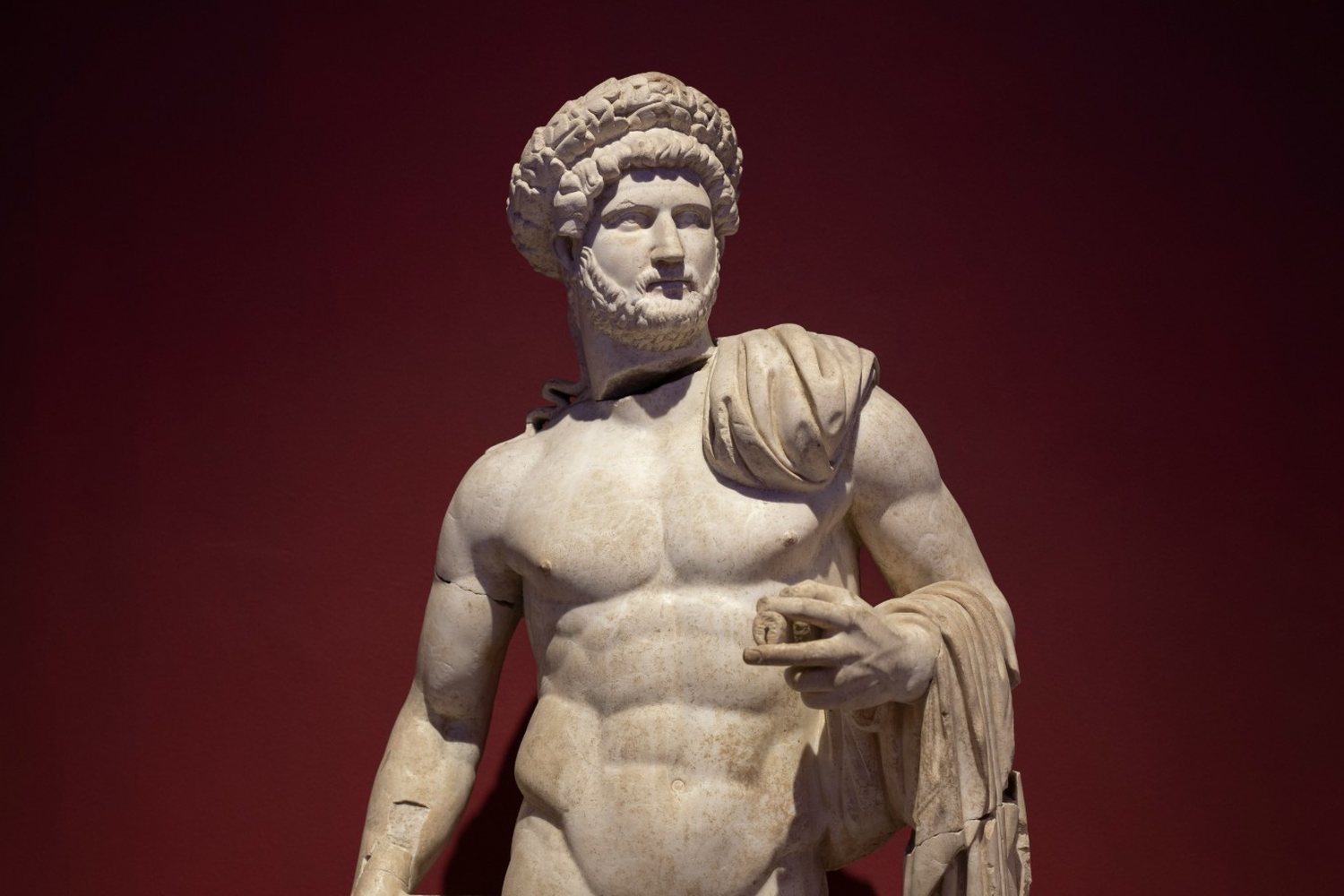
Where are the heroes?
Article published in La Razón on 15/03/2022
Catherine L’Ecuyer, PhD in Education and Psychology, director of Fundación CLE
Those who have the privilege of studying history will have the good fortune to encounter heroes who fought for their convictions and their ideals, even to the point of suffering the gravest consequences. And yet today, it seems, heroes are lacking. Why? Some of the answers to that question are to be found in education. Educational methods are never neutral: they stem from schools of educational thought which, in turn, stem from philosophical positions. What are those positions, and how do they influence whether or not there are heroes in our families?
On the one hand, there is mechanistic education. For this school of thought, the principal function of the school is to mould the pupil. The passive child does not process; to educate is to stimulate and to inculcate. And the school is reduced to a place of training in technical skills, an employment agency for the world of work. In this school of thought, the pupil understands life in terms of determinism, with little power to shape his own destiny. In 1912, Ortega y Gasset wrote: ‘determinism leads to a quietist existence. It slackens souls. It empties society of heroism.’ Mechanistic education fills society with conformist people who shrink from the risk that deep reflection and the defence of one’s own ideals entail. When the highest aspiration is to secure a good position in the labour market, the heroism of those who are prepared to lose their comfort rather than lose their integrity comes to be seen as something anachronistic, utopian. A cynical, complacently bourgeois outlook may even lead us to regard courage as irresponsibility: ‘Don’t make life difficult for yourself’, ‘it’s a lost cause’.
At the opposite extreme lies the second school of educational thought, the romantic-idealist. In this school of thought, the principal function of the school is social. The school is a place of militancy for bringing about a political transformation. Romantic-idealist education is attractive, for it appeals to the free and rebellious spirit of our young people, presenting itself as a non-conformist option. But it understands progress as mere external activity, turning the classroom, through pedagogical activism, into a replica of the bustle of a constantly changing world. In short, if mechanistic education empties society of heroes, romantic-idealist education fills it with hotheads and ranters.
For the third school of educational thought, the classical vision, learning is not a merely external activity. The change that matters in this school of thought is not the social project; it is the inner change that takes place in each person. For this school of thought, the school is a cloister, the university a temple of learning. Education consists in acquiring virtues, in order then to acquire wisdom. The end of education is not to change the world; it is to transform the one who learns. Of course, if the learner improves, the world will undoubtedly improve too, but that will come as a consequence. The hero who is heir to classical education knows that an ideal is something conquered little by little, day by day, through the pursuit of one’s own improvement. No one is a hero in great things who has not first been one in small things. The true hero flees from cowardice and does not confuse the difficult with the utopian. He knows that there are higher goods, which are never subject to compromise, and that the function of an ideal is to point beyond present possibilities. Therefore, the relevant question for a hero is not whether or not the ideal is easily attainable. The only relevant question is whether the ideal points in the right direction.